Marketplace

  • Forex
  • Advertise here

Features

Helpful Links

Contact

May 16, 2008

Correlation or Causation

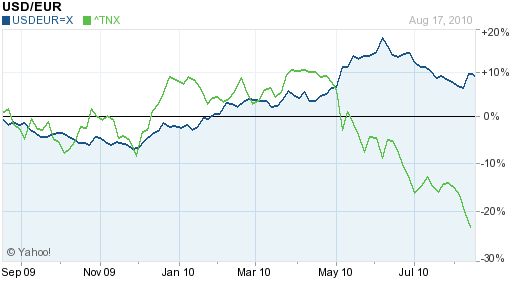
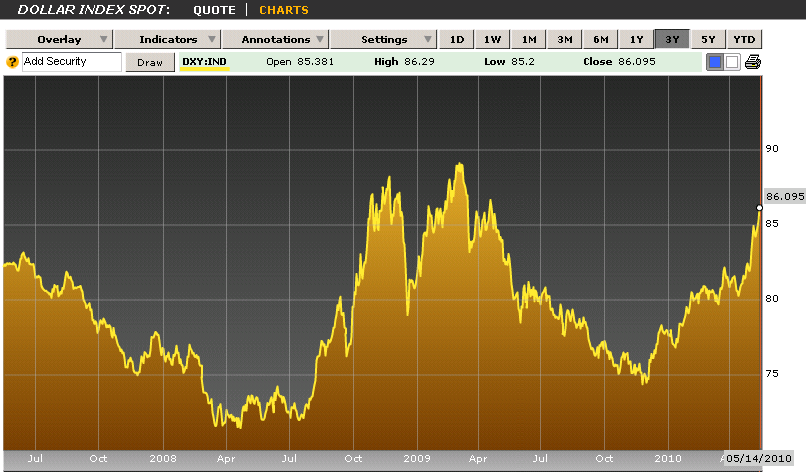
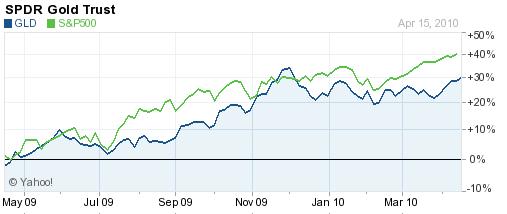
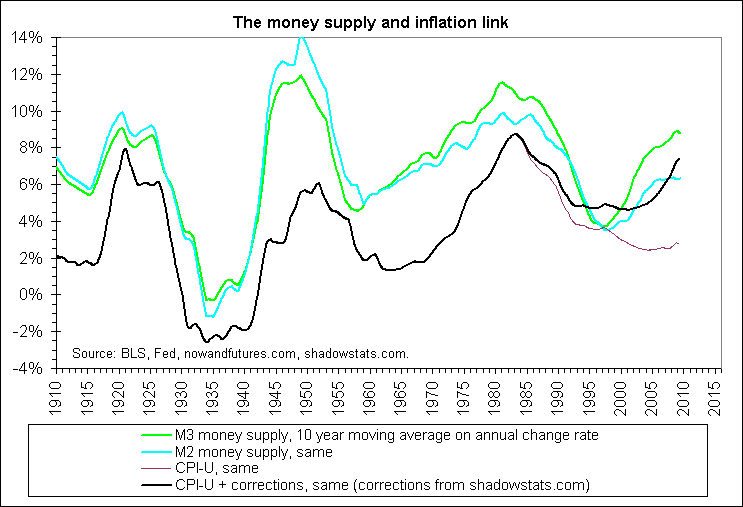
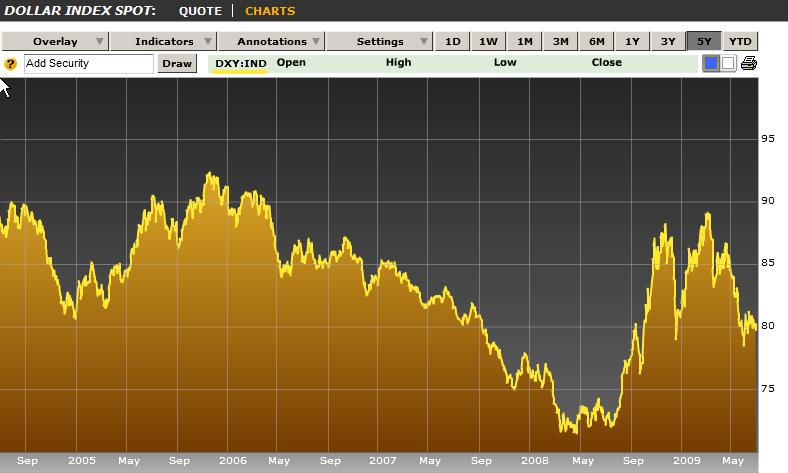
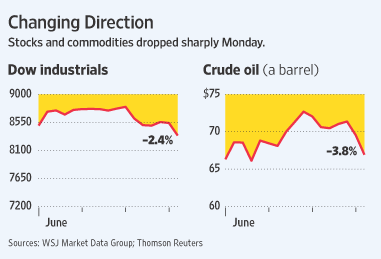
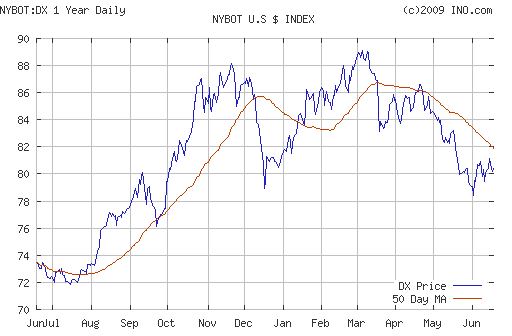
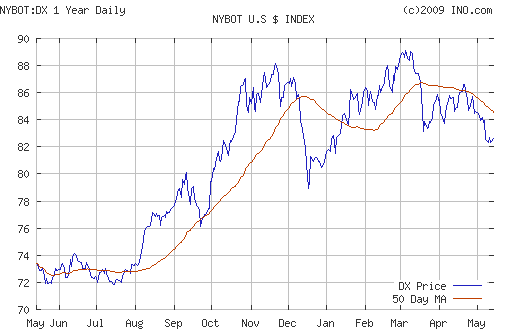
The slight recovery of the USD has been accompanied by a couple of other interesting trends: falling gold and oil prices, and rising equity and bond prices. What is the connection here? With regard to gold and commodity prices, the prevailing theory was previously that high prices were caused not by supply issues, but rather by the Fed's easy monetary policy, which was stoking the embers of inflation. The recent rise of the Dollar has poked a broad hole in this theory, because of the simultaneous fall in prices for certain commodities, namely gold. This has led some analysts to conclude that commodity prices are fluctuating irrespective of the Dollar.

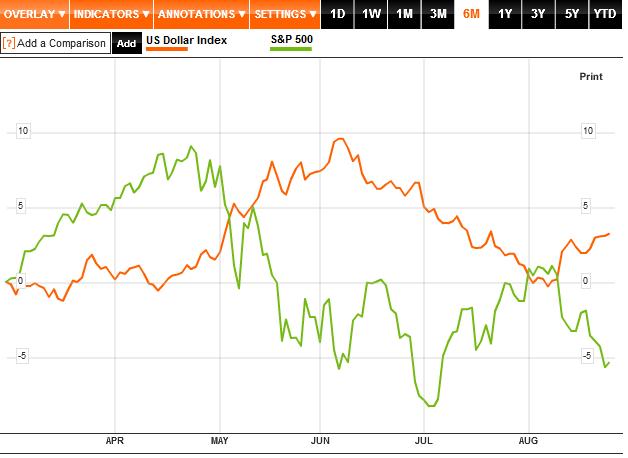
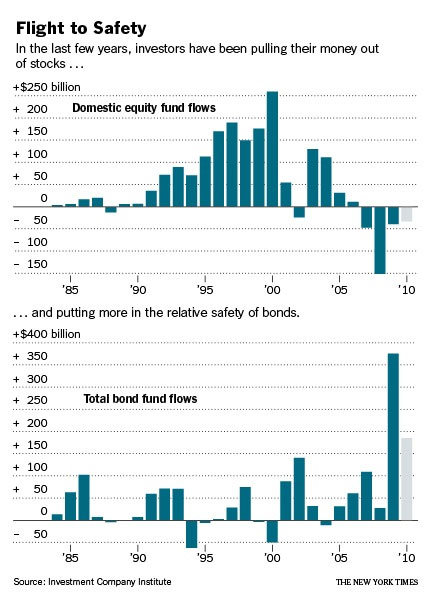
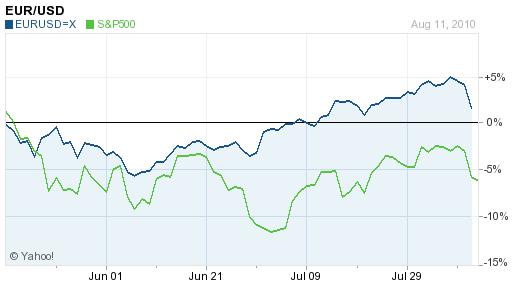
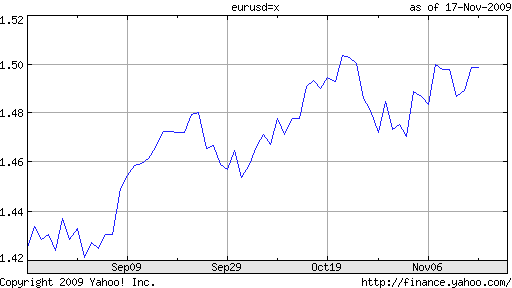
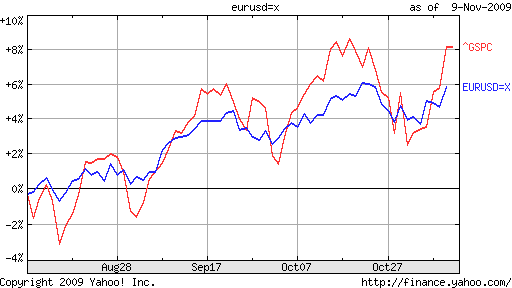
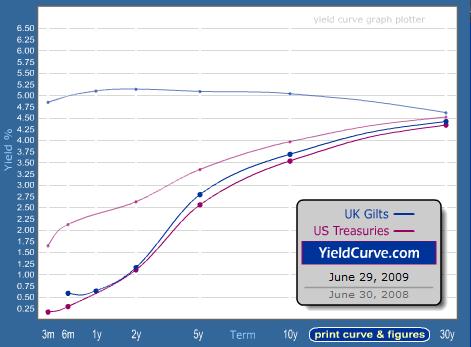
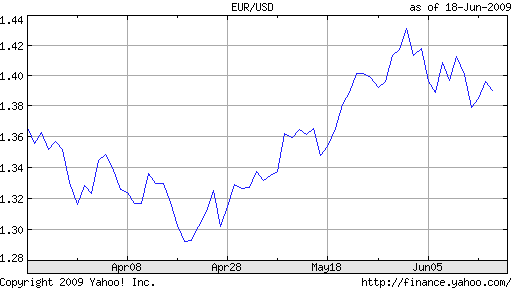
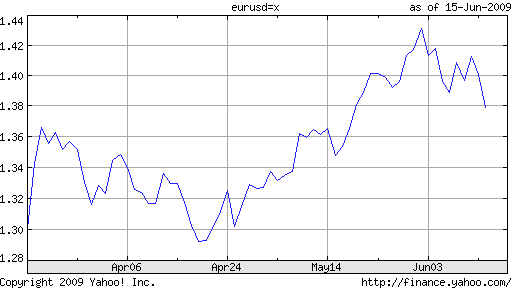
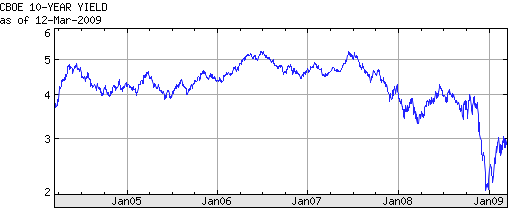
With regard to oil, there does exist a 95% correlation between the price of oil and the EUR/USD exchange rate. However, it now appears that strong oil had been driving the weak Dollar, and not vice versa. The Dollar is also deriving some impetus from a rally in equity and bond markets, which have outperformed their European rivals.  Bond yields remain lower in the US, but with the stabilization of the Dollar, perhaps foreign investors will be convinced that the US is the least risky place to invest during the global economic downturn.

Read More: The dollar rallies at last

May 13, 2008

Q1: Dollar Down 4%

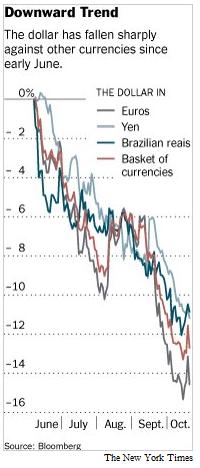
Although the first quarter of 2008 ended on March 31, it wasn't until last week that the Federal Reserve Bank finally finished tallying all of the data and released its obligatory report on the performance of the Dollar. On a trade-weighted basis, the Dollar declined 4%, a figure which accounts for a whopping 11% decline against the Japanese Yen and an 8% decline against the Euro. According to the Fed's analysis, January was relatively kind to the Dollar, as traders remained uncertain as to how the credit crisis would affect the US economy. An outpouring of negative data in the next 4-6 weeks sent the Dollar spiraling downward, although it recovered at the end of March, as the Fed moved to build liquidity in the financial markets. The Fed also noted that it did not intervene in currency markets during the first quarter, firmly putting to rest rumors to the contrary. Forbes reports:

There had been intermittent discussion in the markets of a coordinated foreign exchange intervention by the G-3 central banks, but the Fed report confirmed officially what markets already realized.

Read More: NY Fed reports trade-weighted dollar down more than 4% in first quarter 

May 08, 2008

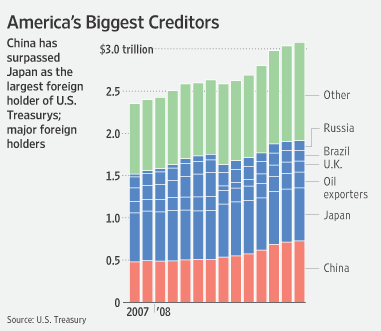
Chinese Exporters Dump Dollar

The anecdotal evidence that China is diversifying its forex exposure away from the Dollar continues to mount. To date, most of the focus has centered around the Central Bank of China, which is passively diversifying its reserves into European and higher-risk assets. Apparently, Chinese exporters are also getting nervous about the impact of a falling Dollar on their respective bottom lines. The RMB has risen 11% since the beginning of 2007, which means Chinese companies now receive 11% less on sales to destinations abroad than they did for equal-priced goods in 2007. As a result, some companies have taken to quoting prices in Euros or to adjusting Dollar-denominated prices every few months. Other companies are building assumptions of a more valuable RMB into their profit models, and setting prices accordingly. The New York Times reports:

“We are gradually increasing our emphasis on the domestic market until we can forget about the export market, because the profit margins on exports are so thin,” [said one exporter].

Read More: Some Chinese Exporters Prefer Euros to Dollars

May 07, 2008

Commentary: The Dollar Conundrum

The Dollar is currently teetering on the edge of a precipice.  Many analysts are predicting that, having recently retreated from a record low against the Euro, the Dollar's best days are still in front of it. On the other hand, the economic data and interest rate pictures remain nuanced, and still favor the Euro on paper. In this article, we aim to sort through this morass, and produce a clear summation of the factors which bear on the Dollar in the short term.

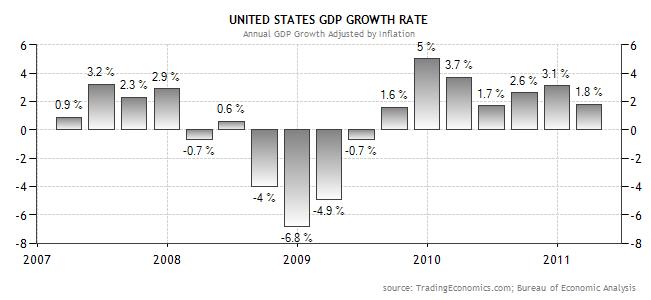
Let's begin with the bullish side of the equation, which is supported by the Dollar's recent upside swing. First of all, while interest rate differentials are currently hurting the Dollar, the Fed is probably near the end of its loosening cycle, while the ECB has yet to begin. The best-case scenario would be a tightening of US monetary policy simultaneous with a loosening of EU policy. Next, there is the economic picture. The most recent GDP data indicates an economy that is still growing, albeit slowly. In addition, the unemployment rate declined in the most recent month for which data is available. The US stock market has regained half the value it lost in the first three months of 2008, and the overall P/E ratio is close to its long-term average, which suggests the markets could appreciate further. Finally, the economic stimulus package that was approved by Congress in March will go into effect this month, as tax rebates worth $150 Billion are distributed to consumers and businesses.

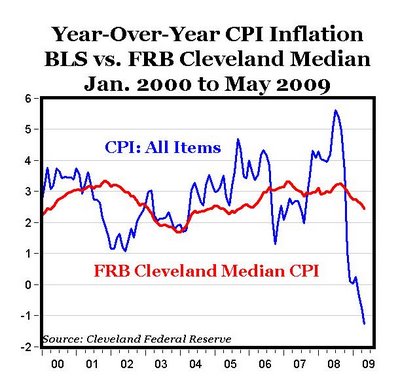
On the bearish side, let's return to the interest rate story. While the future certainly bodes well for the US, the present still favors the EU. US interest rates are currently negative in real terms, and investors have already turned the Dollar into a funding currency for carry trades. Moreover, negative real interest rates implies high inflation. US CPI is hovering around 4.0%, and could continue to climb in proportion with surging food and energy prices. In fact, inflation is now viewed by economists as more problematic than the economy, itself. While US exporters have benefited from the resulting cheap Dollar, US consumers- which account for 75% of the US economy- have not. The economic downturn still has not officially been labeled a recession by the Bureau of Economic Research, but the situation remains tenuous, and the scales could easily be tipped by a few pieces of negative economic data.

The wild card in this mess is housing. In certain regional markets, real estate prices have tumbled by 30%.  In other markets, they have hardly budged. While an estimated $350 Billion in subprime debt has already been written down, analysts disagree over the eventual total.  Estimates vary from $1 Trillion to less than $350 Billion, which would imply "write-ups" on debt that was erroneously declared worthless. The difference represented here amounts to 6% of GDP, which could mean the difference between growth and contraction, a strong Dollar and a weak Dollar, respectively.

May 02, 2008

Fed Lowers Rates

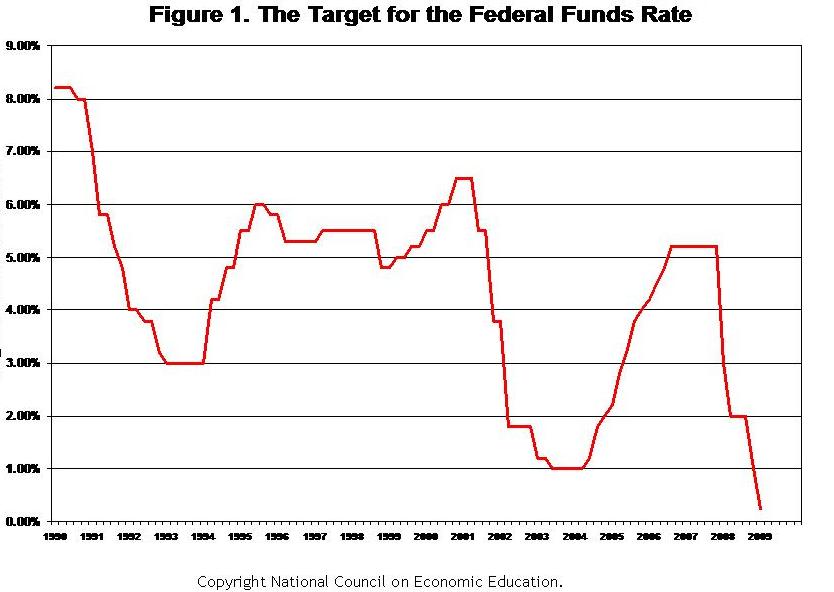
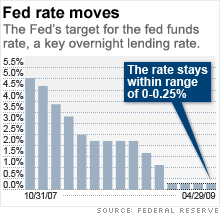
The Federal Reserve Bank recently lowered interest rates for the seventh, and perhaps final, time, bringing its benchmark federal funds rate to 2.0%. Since inflation is still hovering around the 4% mark, the Fed will probably be reluctant to lower rates further. Thus, the markets have been given all of the boost that they are likely to receive, and it is "fate" that will determine whether the economy will find its footing. (GDP growth clocked in at an anemic .6% for the last two quarters). The most recent data (including the just-released jobs data) indicate that the economy may be stabilizing, although consumption and the employment situation are still deteriorating. As a result, the National Bureau of Research has yet to officially declare the current economic downturn a "recession," since the picture remains nuanced. The New York Times reports:

The recession-or-not question is now almost entirely academic, Mr. Bernstein contended, given the steady erosion of American spending power and soaring costs for food and gasoline.

Read More: Low Spending Is Taking Toll on Economy

April 30, 2008

April Marks Dollar Turnaround

Earlier this week, the Forex Blog speculated that the tide was turning on the Euro, which  had retreated from the $1.60 threshold. Sure enough, the month of April saw the best monthly performance by the Dollar in over two years. The sudden about-face by the Dollar stems from changes in interest rate expectations. Only a couple weeks ago, the consensus among investors was that the Fed would cut rates further at its next meeting; the only point of uncertainty was whether rates would be cut by 25 or 50 basis points.

As of today, however, there is only a 25% chance that the Fed will cut rates at all, if you go by futures prices. Regarding the Euro, investors are no longer so sure that the ECB will hike rates in response to surging inflation. In short, the new consensus is that the US/EU interest rate differential has stabilized. Then there is the economic picture; investors have "chosen" to be pleasantly surprised by the most recent economic data. While the economic downturn still seems inevitable, it may not be as severe as investors had previously feared. Reuters reports:

In contrast to slightly stronger U.S. data, the Ifo German business sentiment index this week showed the biggest monthly fall since September 2001.

Read More: Dollar heads for best month in 2-1/2 years

April 28, 2008

Chinks in the Euro's Armor

2008 has witnessed a rapid appreciation in the Euro, which recently breached the psychologically important $1.60 barrier. Last week, however, the Dollar dramatically reversed course, leading many traders to speculate that the Euro's best days may be temporarily behind it. There are two ideas underlying this theory. First, the Federal Reserve Bank is probably near the end of its tightening cycle, while the ECB has yet to begin. In addition, recent economic data suggests that the Euro-zone economy, which has appeared recession-proof in spite of the credit crisis, may soon falter. The best-case scenario, according to Dollar bulls, would be a loosening of monetary policy in the EU simultaneous with tightening in the US. If such a scenario were to obtain, it would bridge the interest rate differential between the two economies, which many believe is behind the weakness in the Dollar. The Wall Street Journal reports:

If bad news out of Europe starts to accumulate and the Fed stands pat, the dollar’s slide could taper off.

Read More: An Endgame for the Euro?

April 25, 2008

AUD Nears Parity

The word "parity" is becoming a mainstay of traders in the forex markets.  In 2007, it applied to the Canadian Dollar, which had rallied 70% over the course of five years to reach the mythical 1:1 level against the USD.  This year, it is the Australian Dollar that is threatening to surpass the Dollar in value. The AUD has always benefited from general USD weakness, but now the focus is shifting to the AUD, itself. The most recent Australian price data suggests that inflation in Australia remains problematic, which could force its Central Bank to raise the benchmark lending rate to 7.5%.  In addition, high commodity prices and consequently strong exports should provide demand for the currency. As always, analysts are divided over the likelihood of parity, but that hasn't stopped them from bandying the term about. The Australian Age reports:

Parity was never a "ridiculous suggestion." "But it's probably a bit tougher going because the Australian economy is slowing," says one analyst. "Then again, if you saw a reacceleration in growth, that might be a different story."

Read More: Our dollar on a roll...

April 22, 2008

The Strong Dollar Myth

When asked to discuss the official position of the USA with regard to its currency, Treasury Secretary Henry Paulson typically invokes the "Strong Dollar Policy."  According to former Treasury Secretary Paul O'Neill, however, this policy is a "vacuous notion."  Mr. O'Neill served as Secretary from 2001-2002, during which time he echoed the strong dollar sentiments of his forebears, without apparently ever believing that the US had any ability or intention to influence the value of the Dollar in forex markets.  The implications of Mr. O'Neill's comments are such that the rhetoric of Secretary Paulson, as well as a recent warning by the G7 nations, are both wholly empty, and the Dollar's value will continue to rise and fall as determined by the markets.  Bloomberg News reports:

O'Neill roiled currency markets when he was in office from 2001 to 2002, at one point with comments in an interview with a German newspaper that the U.S. pursued a policy of a strong economy, rather than currency.

Read More: O'Neill Says U.S. `Strong Dollar' Policy Is `Vacuous Notion'

April 21, 2008

FXCM Introduces ETF Alternative

Forex Capital Markets (FXCM) recently unveiled a product that represents a viable alternative to currency exchange trade funds. A currency ETF is "index-passive" because it is linked to an index and rises and falls in line with the value of the currency with which it is associated.  FXCM's Enhanced Dollar Index programs, however, are "actively managed" and  aim to capture all of the upside of currency movements with only some of the downside. This is achieved through sophisticated trading algorithms that combine a leveraged index approach with market timing and directional investing. To explain in more concrete terms, a leveraged investment in a Dollar ETF would yield an above-market return if the ETF appreciates, but a proportionately below-market return if the ETF loses value.  The Enhanced Dollar Index Program, in contrast, would yield the same above-market return in the first scenario but a smaller loss in the second scenario.

Read More about FXCM Enhanced Index Programs

April 18, 2008

G7 Warns of Volatility

For the last few months, EU politicians have whined about the appreciating Euro.  Aside from some token comments by the European Central Bank, however, the world failed to pay heed.  That changed last week, when the G7 formally and harshly warned that volatility in forex markets risks harming the global economy. But talk is cheap, and the real question is whether it will be backed up by action. Most analysts reckon that it will be difficult and would take time for the governments of the EU, US, and Japan, at the very least, to put together a coordinated plan of intervention.  Besides, the window has probably closed on action by Central Banks, which have conducted monetary policy irrespective of currency valuations. Reuters reports:
The U.S. Federal Reserve Board [is] nearing the end of its interest rate-cutting cycle, the European Central Bank [is] likely to reduce rates before the end of the year, and things might not get much worse for the U.S. economy. That suggests the dollar may recover in the coming months, with or without official intervention.

April 16, 2008

USD May be Nearing Bottom

The USD continues to dominate conversation in forex circles, as investors ponder whether the currency will fall further or whether it has already sunk as low as it can go. One commentator recently encapsulated the debate into six factors, three bullish on the Dollar and three bearish.  Number one on the side of bearishness is the interest rate situation. Short term US rates are negative in real terms, and savvy investors are using the Dollar to fund carry trades in order to take advantage of higher yields outside the US. The second and third factors are technical: based on one measure, the Dollar is not nearly as "oversold" as it was in 1992, the last time the Dollar suddenly reversed a multi-year decline.  In addition, the "open interest" on the Euro is not as large as it should be if traders were preparing to dump it.

First on the list of factors supporting a bullish outlook is the US recession. This is somewhat counter-intuitive, but history shows that US economic weakness typically coincides with Dollar strength.  Perhaps this is because many countries depend on the US to drive the global economy.  In fact, the Dollar is already rising against certain emerging market currencies that rely on the US as an export market. In addition, overseas investors tend to park their capital in the US during periods of global economic instability because of its continued reputation as a safe haven.  Second, the economies of the UK and the EU are already weak and growing weaker every day.  The only reason their respective Central Banks have not eased monetary policy is because they are also focused on combating inflation. However, they may soon have to sacrifice price stability in favor of economic growth, at which point interest rate differentials will begin to reverse themselves in favor of the US.  The final reason for bullishness is technical; based on a series of indicators different from those listed above, the Dollar IS oversold  and the recent slip downward may presage an upward shift.

Read More: Has the U.S. Dollar Bottomed?

April 14, 2008

The Future of FX

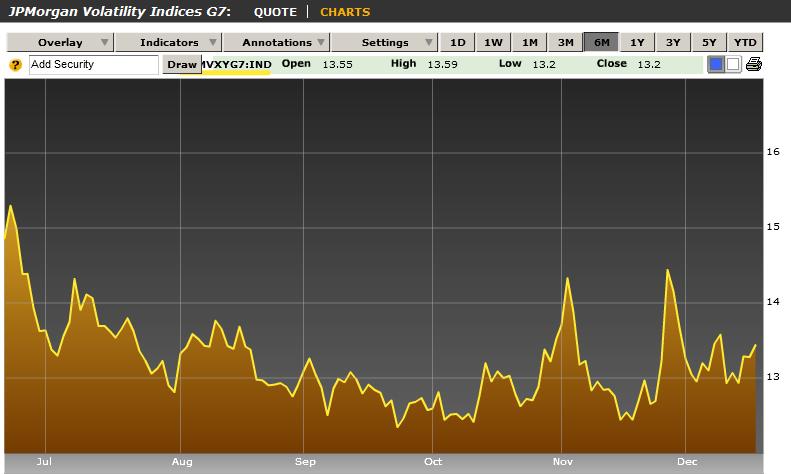
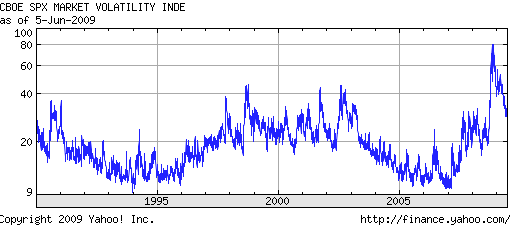
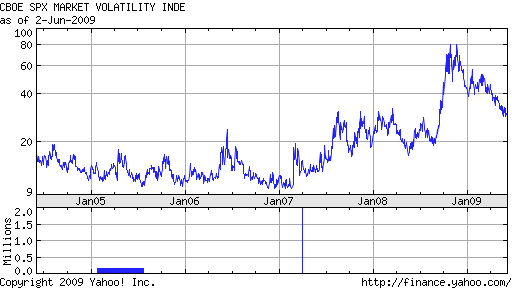
For a recent article, EuroMoney Magazine pulled together some of the top currency analysts on Wall Street for a comprehensive discussion on the state of forex.  The conversation zigs and zags, covering such varied topics as volatility, interest rates, trading strategies, emerging markets, central banks and market infrastructure.  Among other things, it was noted that volatility has surged by 50% since the inception of the credit crunch, returning to levels last seen at the beginning of the decade.  One of the participants broached the possibility of deflation, but that was quickly dismissed by the others due to surging food and energy prices. It was also noted how Central Banks are caught between fighting inflation and facilitating growth, in deciding whether to raise or lower rates, respectively. The main theme in the markets is the sagging Dollar, which is being punished for both economic and strategic reasons as investors sell it in response to the economic downturn and to fund carry trades. Finally, one participant commented that despite growth in liquidity, forex strategy hasn't evolved much, and the markets remain vulnerable to a huge sell-off due to the "mob mentality."

Read the Discussion in its Entirety

April 07, 2008

USD: Where is it Headed?

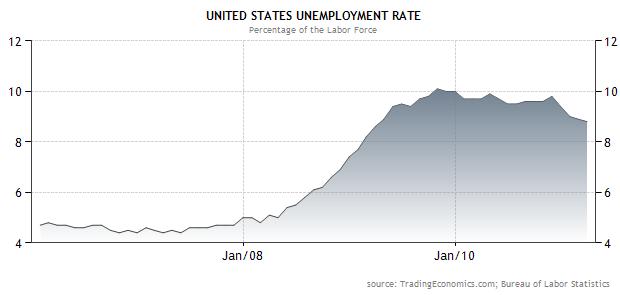
The last week has seen a spate of positive developments in the financial markets, including reassurances by several bulge bracket investment banks that their respective capital positions are in strong and in no need of shoring up. As a result, some analysts are speculating that the worst of the credit crunch has already been priced into securities and the USD, and that actual write-downs on subprime mortgage obligations won't match the "Himalaya-like guesstimates." At the same time, job losses are mounting and the unemployment rate recently crossed 5% for the first time in two years. Interest rate futures contracts suggest a 20% chance that the Fed will cut rates by 50 basis points at its meeting on April 30. Then, there is the ECB, which has been vocal about fighting inflation and European financial markets, which have benefited from "domestic" investors diversifying within the EU rather than to the US.  Thus, there is no definitive answer regarding where the Dollar is headed in the near-term: everyone seems to have their own opinion.  Bloomberg News reports:
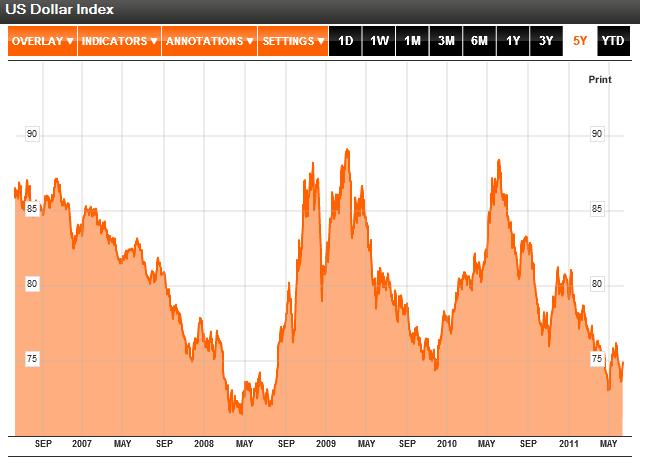
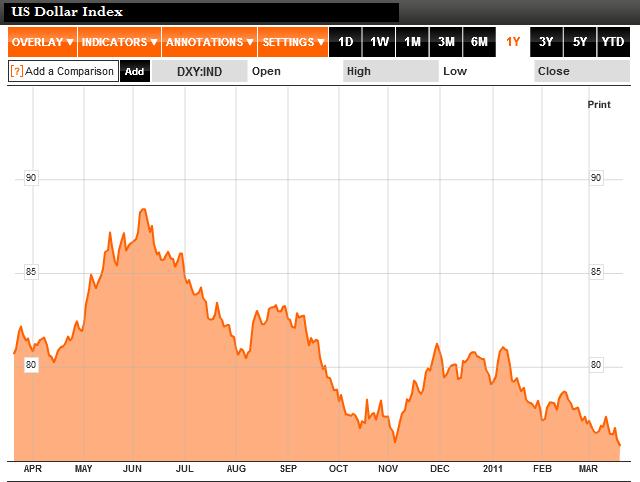
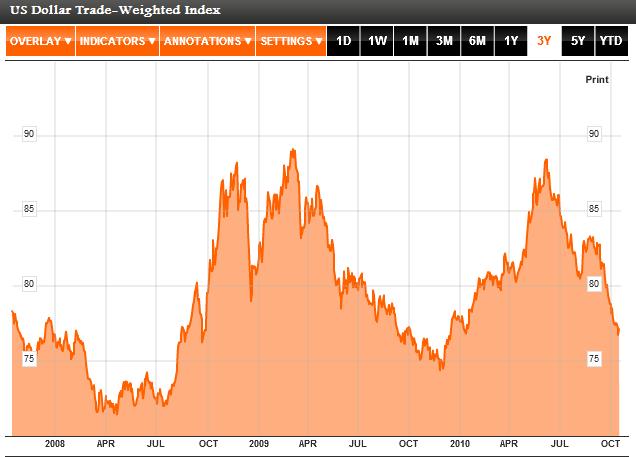
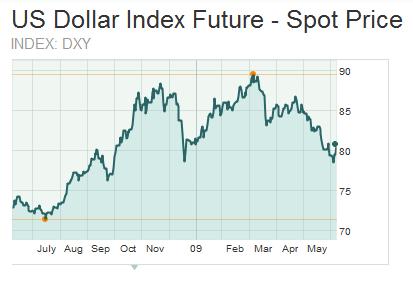
The Dollar Index traded on ICE Futures in New York, which tracks the currency against those of six trading partners, dropped 0.2 percent to 72.049, its third straight decline. It was at a record low of 70.698 on March 17.

Read More: Dollar Falls Against Euro; Report May Show Payrolls Declined

April 03, 2008

USD: Worst Quarter in 4 Years

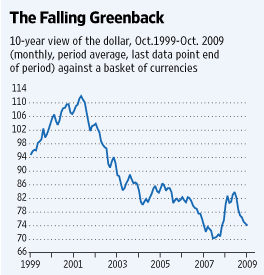
In the first three months of 2008, the USD notched its worst quarterly performance since 2004, falling over 8%. During the same period, the Dollar lost 10% of its value against the Japanese Yen and 6.4% against a broad basket of currencies. Forex analysts reckon the slide was so steep because investors have taken stock of the US economic situation and have concluded that recession is inevitable. The story is also being driven by interest rates. The Fed has already cut rates by 300 bps in the current cycle of easing, making the benchmark federal funds rate the lowest in the industrialized world, in real terms. Meanwhile, the European Central Bank is giving every indication that it will maintain rates at current levels in order to keep a lid on inflation. As a result, the Dollar could fall further, especially if the Fed continues to hike rates and investors use the currency to fund carry trades. Reuters reports:

[According to one analyst], "And to call a bottom now is still a very risky call. It's too early to say the worst is behind us and the dollar's in for a sharp rebound."

Read More: Dollar logs weakest quarter vs euro since 2004

March 31, 2008

Dollar Decline: Not a Sure Thing

Since 2002, the Dollar has lost 70% of its value, relative to the Euro.  Meanwhile, the same factors that signaled bearishness in 2002 persist in 2008, or even worsened in some aspects.  The twin deficits are still growing, though the current account deficit may be leveling off.  The US economy is headed towards recession.  Inflation is set to rise due to soaring commodity prices and a loosening of monetary policy.  As a result, many investors are betting that the Dollar's slide will continue well into the near future.

However, prudent investors would be wise to "handle with care." While not entirely applicable to forex markets, efficient markets theory dictates that inherent in a security's current valuation is all relevant, publicly available information. Thus, all of the bad news listed above has already been priced into the Dollar, to some degree at least. The rule of diversification is in full effect when betting on forex. Thus, rather then putting all of one's chips directly behind one currency, an investors could buy foreign securities (stocks and bonds) instead, which also capture any currency appreciation (and depreciation).  Investors can also purchase Treasury Inflation Protected Securities (TIPS), whose yield is linked to inflation and, thus, acts as a hedge against a declining Dollar. The Wall Street Journal reports:

While some market watchers believe the six-year dollar bear market isn't over yet, investors should recognize that trends in the currency markets are typically marked by volatile ups and downs along the way.

Read More: Don't Bet the Farm on Dollar's Skid

March 27, 2008

Euro Could Replace Dollar

Two American economists recently conducted a computer simulation to determine how the role of the US Dollar as the world's reserve currency will evolve over the next decade.  Their hypothesis- that the Dollar's preeminence would be maintained- was contradicted by the simulation leading them to conclude that the Euro will overtake the Dollar within the next 10-15 years. This may be hard for many analysts to stomach, since the Dollar's share in global currency reserves is 66%, compared to the Euro's 25%. In addition, the Dollar has held its title for nearly 150 years, and it's difficult to fathom its being replaced.

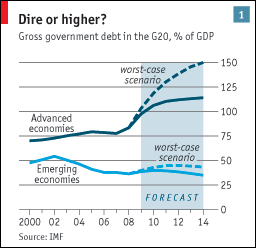
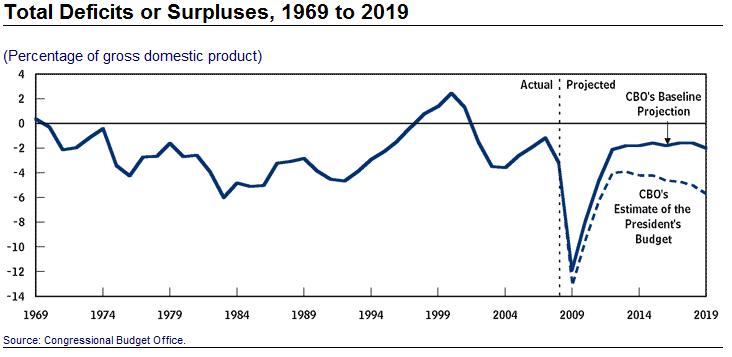
However, two factors have emerged within the last 10 years, lending support to the argument.  First, the US twin deficits have exploded; the current account deficit approximates $800 Billion and the national debt is estimated at $9.4 Trillion. Second, prior to the inception of the Euro, there didn't exist a credible alternative to the Dollar. The Deutsch Mark and Japanese Yen initially seemed like potential candidates, but the German currency was folded into the Euro, and the Japanese economy has soured and taken over by deflation. Then there are peripheral factors, like US monetary policy, which is facilitating inflation and eroding the Dollar.  There are also signs that a neo-imperialist foreign policy has overstretched the US, and foreign Central Banks are becoming nervous.  The Financial Times reports:

Many developing countries will find it harder to maintain their dollar pegs. They may be reluctant to drop them now but there will come a point when the rise in inflationary pressures becomes unbearable.

Read More: This crisis could bring the euro centre-stage

March 24, 2008

The Rising Threat of Intervention

Last week, the Euro retreated from the record high of $1.60 that it achieved earlier in the week. Policymakers are still concerned, however, and are perhaps using this lull to come up with a plan of action should the Dollar resume its slide. In fact, the consensus among analysts is that coordinated intervention is likely if the Euro crosses a certain threshold- perhaps $1.65. In order to be successful, the intervention would need to involve the Federal Reserve Bank and the European Central Bank principally, as well as the peripheral participation of the Central Banks of Switzerland, Japan and England.  The situation is complicated by the monetary policy of the ECB, the tightness of which is causing the interest rate differential with the US to widen dramatically. Already, volatility levels in forex markets are slowly climbing, suggesting that investors are bracing themselves for a big move.  The Guardian UK reports:

ECB Executive Board member Lorenzo Bini Smaghi said in a speech on Tuesday markets sometimes overshot, with possible negative implications for the world economy. Since his speech, the dollar has strengthened by almost 2 cents against the euro.

Read More: Euro intervention edging nearer, but still distant

March 20, 2008

USD: 0 for 3

In a recent commentary piece, the Market Oracle used the analogy of baseball to outline why this will be an "off year" for the Dollar, listing three reasons to support its claim. Consumer spending was listed first because it represents the largest component of US GDP.  Since much consumption is financed through borrowing and since the credit crunch has forced banks to rein in lending, the Oracle reasoned that consumer spending will be especially hard hit. Next, there is the worsening employment picture. As its moniker implies, the "jobless recovery" that has characterized the US economy over the last few years did not add many jobs, and due to the economic downturn, jobs are now being shed.  Finally, the Market Oracle has identified the Federal Reserve as a primary contributor to the decline of the Dollar. While the Fed is trying to shore up the economy, it is simultaneously enabling inflation.  Thus, even if the battle is won and recession is averted, the Fed may still find that it has lost the war- on prices.

Read More: Three Strikes Against the U.S. Dollar

March 17, 2008

Bank Collapses, Dollar Plummets

Over the weekend, Bear Stearns, a prestigious American investment bank, hurriedly scrambled to find a buyer in order to avoid having to file for bankruptcy. While a buyer (JP Morgan) was ultimately secured, investors remained jittery, as the collapse of this magnitude is virtually unprecedented.  When forex markets re-opened on Monday, the Dollar crashed against all of the world's major currencies, namely the Euro and the Yen. Furthermore, analysts are now beginning to view forex intervention as increasingly likely. It's still unclear whether the Bank of Japan or the European Central Bank (with or without support from the Fed) would spearhead any such intervention.  At the breakneck speed at which events are unfolding, however, no one will be surprised if a plan is quickly cobbled together. The Wall Street Journal reports:

"Were such intervention to be seen, (the euro) could briefly trade down to $1.55, yet unless the (ECB) is prepared to back up such intervention with a rate cut, intervention will be futile," said [one analyst].

Read More: Dollar's Slide Keeps Pace

March 13, 2008

Currency Traders Dump Bernanke

On January 31, 2006, Ben Bernanke officially replaced Alan Greenspan as Chairman of America's Federal Reserve Bank. At that time, the EUR/USD and USD/JPY exchange rates hovered around 1.20 and 118, respectively. For the first year of his tenure, Bernanke lived up to investor expectations and burnished his credentials as an inflation fighter by continuing a string of interest rate hikes begun by Greenspan. Fast forward to today, where the US economy is in tatters, inflation is raging, home and equity prices are slumping, and the Dollar has declined to $1.55 against the Euro and 100 against the Japanese Yen. Meanwhile, forex volatility levels are climbing rapidly, suggesting that the Dollar's troubles still havn't reached their climax.

Needless to say, currency traders- and a whole host of other investors and analysts- are furious with Bernanke. Many insist that he misled them, by downplaying the seriousness of housing jitters and insisiting stubbornly that inflation isn't a problem.  Even now, he is lowering interest rates in order to spur the economy, but at the expense of price stability.  As any experienced currency trader can attest, low interest rates and high inflation are a recipe for a weak currency. Reuters reports:

Bernanke "has sacrificed the dollar in an attempt to save jobs and U.S. business," said one analyst. "He had to do something, but at the same time he is only putting off the crisis. We will face tight credit for a decade and we will have stagflation."

Read More: Bernanke rapidly loses fans in the forex world

March 10, 2008

Dollar Falls to Record Lows

Over the last couple weeks, the Dollar has plummeted against all of the major currencies, falling below the $1.50 mark against the Euro for the first time ever.  It seems investors are reacting to a spate of negative economic data which are painting an increasingly bearish picture for the US economy.  In addition, the Fed seems likely to lower rates further while the ECB will maintain rates at current levels. For a brief period, talk of recession was actually helping the Dollar, as investors predicted that the global economy would be harmed more than the US economy, but it looks like that period has passed. As a result, the EU is growing increasingly alarmed, and the pressure is building for some kind of intervention.   AFX News Limited reports:

Euro group president Jean-Claude Juncker said currency markets are overreacting to the short-term outlook for the US economy. " We don't like excessive volatility in exchange rates," Juncker said.

Read More: Euro group's Juncker says currency markets reacting too hastily to US outlook

March 04, 2008

How to Profit from Low Volatility

Based on several indexes, volatility in forex markets is nearing historic lows.  How can this be explained, given the enormous daily swings in equity and bond markets? The first explanation is that business cycles, and by extension, monetary policies, are gradually synchronizing across the industrialized world, especially among the USA, EU, and Japan. When inflation rates and interest rates are similar across different countries, this mitigates any theoretical need for changes in exchange rates. The second explanation is that the tremendous growth in forex volume ($3 Trillion per day and rising) is increasing liquidity and lowering volatility.

More importantly, is it possible to profit in a climate where volatility is lacking? The answer is "of course."  It simply involves a shift in strategy.  When volatility is high, trading is usually the most profitable strategy: using technical analysis and churning your "portfolio" on a daily basis.  On the other hand, when volatility is low, then trending is probably the best bet. Don't forget: volatility is not the same as directional movement.  If a currency appreciates every day by only a small increment and without any wild swings, volatility is low but the profit potential is high.

Read More: Making the Most of a Benign Environment

Continue reading "How to Profit from Low Volatility" »

February 28, 2008

USD: What is the story?

Recent news reports have painted a downright bleak picture of the US economy. Home prices are now falling. Equity prices are also falling, at an annualized rate of 20%.  Meanwhile, energy and food prices are rising, dipping into what little purchasing power consumers can still claim.  Somehow, as DailyFX, recently reported, the Dollar has held its own. Their reasoning is that there is a struggle being waged in forex markets between yield and growth. On the one hand are investors who are bearish on the Dollar because of interest rates that are headed downwards, despite already being low.  On the other hand are investors who think that yield is comparatively unimportant, since the rate cuts are needed to shore up the economy. While interest rate differentials do not favor the US, the economic growth that they are intended to bring about tell a different story. DailyFX reports:

The only problem with this thesis is that 2 percent interest rates or 100bp is about as low as the market expects the Fed will go. If banks are forced to take more write-offs and the US economy deteriorates further, the Federal Reserve may be forced to go below 1.00 percent.

Read More: What Matters More For the US Dollar:  Yield or Growth?

February 26, 2008

Fed in Lose-Lose Situation

Remember the expression "Goldilocks economy," used to to characterize the Fed's perennial aim of simultaneously pursuing economic growth and price stability?  How about "stagflation," a term coined in the 1970s to describe a unique period in US economic history where low growth coincided with inflation.  Now, these two scenarios are being juxtaposed as the Goldilocks economy gives way to stagflation. The Fed is trying to delicately toe the line, as equity and home prices sink while prices rise; one index suggests prices have risen over 7% year-over-year.  The index more often cited, the CPI, reads 4.3%.  Both of these figures exceed current interest rate levels. 

What, then, is the Fed's proper course of action, especially as far as Dollar bulls are concerned?  If it holds rates or contindfues to lower them, the economy could avert recession but prices would likely continue to climb, eroding the value of the Dollar.  On the other hand, if rates are hiked to mitigate against inflation, a recession would almost become inevitable, and the Dollar would feel the drag of capital being pulled overseas. The New York Times reports:

“February may go down in history as the month that the previously indefatigable U.S. consumer finally threw in the towel, beaten by a combination of deteriorating labor market conditions, surging prices for food and energy and collapsing house prices,”

Read More: As Inflation Rises, Home Values Slump, Data Show

February 19, 2008

Bernanke Hints Rate Cuts

In testifying before the Senate Budget Committee, Ben Bernanke, Chairman of America's Federal Reserve Bank, hinted strongly that further rate cuts would be necessary to stabilize the US economy.  Last week, the Forex Blog covered an editorial which suggested that Bernanke knew something about the state of the economy that the American public did not, which his testimony seemed to confirm.  Bernanke testified that the Fed is also committed to fighting inflation, but the emphasis was clearly on spurring economic growth. As a result, futures markets are pricing in a rate cut of 50 basis points, projected for the next month.  The forex markets were unambiguous about the implications of this development for the Dollar.  Thomson Financial reports:
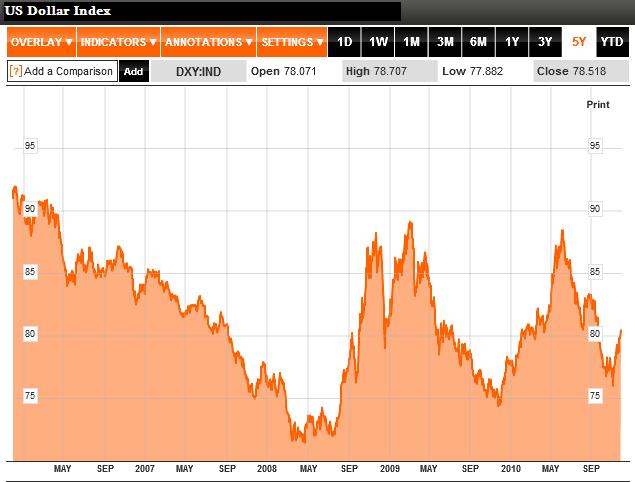
'By highlighting the downside risks to growth, Bernanke confirmed prevailing aggressive rate cut speculation, which currently keeps the dollar under broad pressure,' said Antje Praefcke, currency strategist at Commerzbank.

Read More: Dollar remains under pressure following Bernanke's testimony

February 14, 2008

G7 Ignores Currencies

In its annual meeting, the G7 virtually ignored the situation in forex markets.  In previous years, the G7 used the so-called "communique," which essentially functions as a summary of the meeting, to rebuke China for not allowing the Yuan to appreciate at a satisfactory pace. This year, the RMB has appreciated markedly- by 9% on a trade-weighted basis- and thus, the G7 opted not to apply further rhetorical pressure.  In addition, several of the most prominent EU member states had hoped to work a discussion of the Dollar into the communique, but alas, any mention was notoriously absent. Analysts have speculated that this is due both to America's political indifference towards the valuation of the Dollar as well to a disagreement over what the correct valuation should be, if indeed it is undervalued. Thomson Financial reports:

"It was clear a few days ago that there was going to be no change in the (currency section) of the communique and that really spoke of a lack of consensus about mainstream currencies."

Read More: China spared ritual lambasting as yuan slips down G7 agenda

February 13, 2008

Dollar Notches Stellar Weekly Performance

Last week, the USD recorded its best weekly performance since 2006, rising 3 cents against its chief rival, the Euro.  Apparently, analysts are becoming increasingly pessimistic about the effect of the America recession on the global economy.  The consensus is now that a dampened global economy will induce a trend towards risk aversion, which favors the world's #1 and #2 reserve currencies, the Dollar and the Euro, respectively.  However, it also appears the near-term economic prospects for Europe are less rosy than originally forecast,.  Thus, if last week is any indication, the Dollar should receive a larger proportion of risk-averse capital. Reuters reports:

"Despite a torrent of bad economic news the dollar has been on a tear this week, as the currency market recognized the fact that the slowdown in U.S. economic activity is likely to drag down growth in the rest of the G10 universe..."

Read More: Dollar set for biggest weekly rise since June 2006

February 11, 2008

Dollar Benefits from Risk Aversion

As talk and evidence of a US economic recession builds, the Dollar has witnessed a slight upswing.  How to explain these seemingly contradictory trends? The rationale is surprisingly simple.  While a US recession would predictably hit the US harder than other countries, it would still hamper growth abroad, especially in emerging markets that have come to depend on exports to the US to drive growth.  Accordingly, investing in such emerging markets becomes relatively more risky than investing in the US, which is still considered to have the world's most stable investing climate from a long-term perspective.  Thus, as risk aversion rises, so does the Dollar. Thomson Financial reports:

The combination of poor data weighed on stock markets in the US and Asia, while major bourses in Europe have all opened lower today. This meant the dollar gained support as investors shy away from riskier emerging market assets.

Read More: Dollar gains on the back of rising risk aversion

February 08, 2008

China is Earning Negative Carry

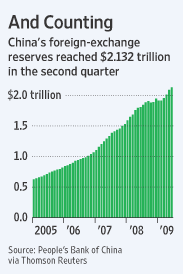
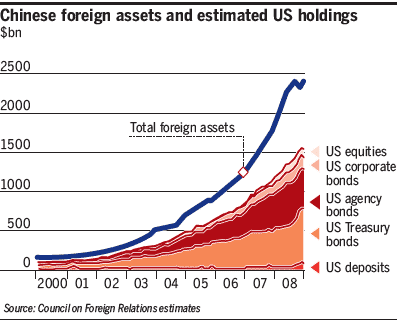
China's foreign exchange reserves currently approximate $1.5 Trillion, the majority of which is denominated in USD.  Moreover, the Central Bank of China earns interest on every Dollar it adds to its reserves but must also pay interest on every RMB note that it must issue to offset the Dollars. Since the Fed began easing monetary policy, the amount of carry (the difference between what the Central Bank receives on Dollars and pays on RMB) earned by the Central Bank has completely inverted, such that it now loses 250 basis points on average for each Dollar exchanged for RMB. 

Based on the rate at which China is currently accumulating reserves, this amounts to between $5 Billion and $10 Billion per month, depending on which method of accounting is utilized. Furthermore, this trend has been exacerbated because China is accumulating reserves at a faster rate than its economy is growing. Some analysts have speculated that this could turn into a major political issue, with important implications for the RMB/Dollar exchange rate. The Financial Times reports:

The renminbi has started to appreciate more rapidly in recent months, rising at an annualised rate of about 20 per cent, compared with 6-7 per cent over the whole of 2007.  In the longer-term, say economists, China will have no choice but to allow its currency to appreciate faster, even in the face of entrenched domestic resistance.

Read More: Beijing starts to pay for forex ‘sterilisation'

February 07, 2008

Why the Fed Cut Rates

It seems self-evident that the Fed is easing monetary policy because it is trying to stimulate the economy and shore up confidence in capital markets by making credit less expensive.  Dig a little deeper, however, and a more nuanced picture begins to emerge.  Conspiracy theorists believe that the Fed knows something that investors don't, perhaps that the subprime mortgage situation is more serious than the public is being led to believe. Accordingly, the theory goes, it is trying to prevent a complete collapse of the financial system.  Another theory holds that the Fed is cutting rates because it has nothing to lose by doing so. Inflation is still low, from a historical standpoint, and the Fed may be trying to inject liquidity into the financial markets before it is too late.  Yet another theory holds that the Fed is deliberately targeting a weak Dollar and high commodity prices, as the former benefits the US directly by narrowing the trade imbalance, and the latter benefits the US indirectly by helping emerging market economies, which are relatively more dependent on commodities.  The Chicago Tribune reports:

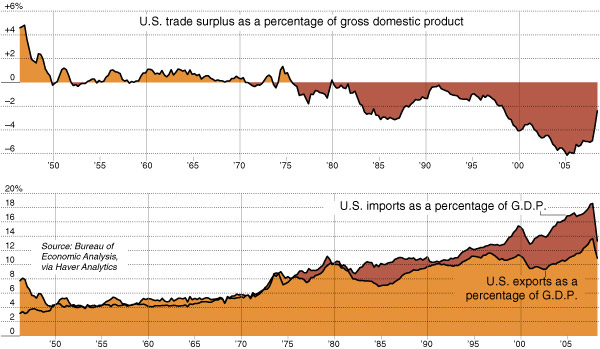
An increase in exports was one of the positive features of Wednesday's disappointing fourth-quarter report on U.S. gross domestic product. The cheaper dollar is a major factor in export growth, both in terms of current sales and expansion of overseas market share by U.S. manufacturers.

Read More: Fed rate cut conspiracy or power play?

February 04, 2008

USD May Bottom Out

As far as Dollar bulls are concerned, all news is bad news. An economic recession seems inevitable. Interest rates are already negative in real terms, and are now the lowest in the industrialized world, save Japan.  It's still unclear how much subprime debt will be written down by financial companies before all is said and done.  But analysts from Brown Brothers Harriman, an investment bank, think the Dollar's multi-year decline is coming to an end.  There are two main reasons underlying their rationale.  The first point is purely technical- that the all of the bad news and in fact, the worst possible scenario, has already been priced into the Dollar.  The second point is fundamental- that the speculative hot money that has poured into the US as foreign investors take advantage of a weak Dollar and that is sustaining the US current account deficit is now transitioning into long-term foreign direct investment.  The Financial Post reports:

In addition, BBH believes that in a weak dollar environment, foreign companies will now start looking to move production and sourcing to the United States, following the successful example of Japanese auto makers.

Read More: Greenback is nearing bottom, currency experts say

January 31, 2008

Fed Lowers Rates...Again

Today, the Federal Reserve Bank lowered interest rates for the second time in as many weeks, bringing its benchmark federal funds rate down to 3.00%.  The Fed has now lowered rates by 2.25% since August. The move came as a relief to investors, who now see that the Fed is serious about preventing the economy from slipping into a full-scale recession. However, it remains to be seen whether the rate cuts will provide the necessary boost to the economy or instead prove too little too late. As far as the Dollar is concerned, the rate cuts carry two (conflicting) implications.  On the one hand, the economy and stock market could rally, which would likely be matched by a Dollar rally.  On the other hand, the interest rate differential between the US and EU is now a 1% and risk-averse investors hungry for yield will be hard-pressed to justify shifting capital to the US. The New York Times reports:

Many economists are far from convinced that even a combination of tax rebates and cheaper money would prevent a recession. And in a sign that bond investors are fretting that the moves could lead to higher inflation, yields on 10-year and 30-year Treasury securities edged up slightly on Wednesday.

Read More: Fed Cuts Key Rate as Stimulus Plan Advances

January 30, 2008

Why a Strong Dollar is Good for the US Economy

For at least the duration of the current administration, the official US stance towards its currency has been a "strong dollar" policy.  In hindsight, it appears that this policy was entirely baseless, since its was directly undermined by the simultaneous easy monetary policy, and thus it stands to reason that US policymakers did not actually believe that a strong Dollar policy was necessary to pursue.  In a recent op-ed piece published in the Wall Street Journal, one analyst outlines the case for a strong dollar, and by extension, why the depreciating Dollar is bad for the US economy. 

First, since oil contracts are settled in Dollars, a weak Dollar has directly contributed to high oil prices, which has several negative economic and geopolitical consequences. Second, a cheap Dollar is eroding the purchasing power of US consumers directly by making imports more expensive and indirectly through inflation. Third, the weak Dollar shifts the balance of economic power in favor of US competitors, which don't need to grow as fast to keep pace with the US, in Dollar terms.  Finally, the recent weakness threatens the long term reserve status of the Dollar, which has important implications for economic growth and jobs creation.

On the other hand, argues the analyst, the conventional wisdom that a declining Dollar is necessary to correct the current account and trade deficit is bunk, since much of the trade deficit is accounted for by intra-company trade and since the current account deficit is generally overstated and not connected to currency valuations. In short, he argues, it is in the best interest of the US to align its rhetoric with its economic and monetary policies such that the long term luster of the Dollar is restored.

Read More: The Dollar and the Market Mess

January 24, 2008

Foreign Investors Target US

So-called 'Sovereign Wealth Funds' are the talk of the town, stealing headlines as part of a multi-billion dollar buying spree.  Anecdotally, stories of these funds and other institutional foreign investors have made a big splash, epitomized by a few high-profile investments in struggling American investment banks.  It no longer appears these stories were isolated, as suggested by some pretty compelling economic data.  In 2007, total foreign direct investment into the United States totaled $400 Billion, which represents a 90% increase over 2006.  In addition, the first few weeks of 2008 saw a frenzy of activity, which suggest this trend will continue.  Investment in the US is being driven primarily by a weak Dollar and attractive stock market valuations.  If the bad news on the US economy continues to pour in, analysts warn that foreigners could play an even larger role in mitigating against recession. The New York Times reports:

The weak dollar has made American companies and properties cheaper in global terms. Even as Americans confront the prospect of a recession, economic growth remains strong worldwide, endowing oil producers like Saudi Arabia and Russia and export powers like China and Germany with abundant cash.

Read More: Overseas Investors Buy Aggressively in U.S.

January 22, 2008

Fed Dramatically Lowers Interest Rates

Last week, the New York Times published an article with the byline "Is the Federal Reserve’s chairman, Ben Bernanke too nice for the job?" Apparently, talk had been building on Wall Street that Bernanke was not tough enough to deal with the growing problems faced by the world's largest economy.  Bernanke responded publicly in a speech in which he promised that the Fed would act quickly and decisively to confront such problems.  Then on Tuesday, the critics were silenced peremptorily by a Fed rate cut of 75 basis points, the largest single cut in two decades. Moreover, Bernanke intimated that additional rate cuts could come as soon as next week. 

It's unclear how this activity will affect the Dollar.  On the one hand, it implies beyond a reasonable doubt that the US economy is indeed headed for recession.  Bond yields are declining and the stock market has lost 15% of its value since October.  On the other hand, the Fed has demonstrated that it is willing and able to take the necessary steps to avoid a hard landing at any cost. At the same time, investors around the world fear that a US recession will have an adverse impact on the global economy.  And where do investors park their money during periods of global economic uncertainty? Answer: USA. Sure enough, the Dollar has already begun to rally after taking a big hit immediately following the rate cuts.

Read More: Fed Rate Cut Halts Market Free Fall

January 17, 2008

Economist: Fed Should Prop Up Dollar

In a recent editorial published in the Wall Street Journal, the Chief Economist for Bear Stearns (an American investment bank) advocated intervention by America's Federal Reserve Bank on behalf of the Dollar.  He reasons that the best way both to fight and inflation and alleviate the possibility of recession is to strengthen the USD.  Current measures, which include lowering the discount rate and manipulating the money supply, are actually worsening inflation.  As a result, institutional investors are moving their capital en masse outside the US in order to prevent the declining dollar from corroding their investment returns. While paying lip service to the prevailing wisdom that Central Banks are essentially impotent when it comes to managing currencies, he insists that strong rhetoric by the Fed could conceivably convince investors that it stood behind the "Strong Dollar Policy" it promotes.  The Wall Street Journal reports:

By saying they want a stronger dollar, the Fed...could make it happen. Government policy makers have almost absolute control over perceptions of the future scarcity of dollars. This controls the demand for dollars almost as much as it does the supply, setting its value as much or more than rates do.

Read More: Markets and the Dollar

January 12, 2008

USD Draws Support from Abroad

2008 is still in its infancy, which means the self-proclaimed forex experts can be excused for offering their projections on what the year has in store for the Dollar.  If currencies were traded in a vaccum, the Dollar would probably trend upward, since many technical factors suggest it is oversold.  From a fundamental standpoint, however, it is probably overvalued, per the laws of interest rate parity and purchasing power parity.  Relative to other countries, though, it may be undervalued.  From this standpoint, argue some analysts, the biggest impetus for a Dollar upswing will come not from good news emanating from the US, but rather from bad news emanating from the rest of the world.  For example, the British economy, balance of trade, and monetary policy outlook is even more bleak than the US.  The CEO of Airbus, one of the EU's most important companies, has threatened to shift production away from the EU if the Euro remains expensive.  Finally, the Central Bank of China is allowing the Yuan to appreciate at a faster pace against the Dollar.  As far as Dollar bulls are concerned, it might be best if the US government simply sits tight. The BBC reports:

"A lot of bad news is already priced into the dollar. It's elsewhere that the shocks could come from, perhaps from the European Central Bank, or the Bank of England."

Read More: 2008 - the return of the dollar?

January 10, 2008

Potential Tax Cuts Boost USD

Recently, most of the news regarding the Dollar has, frankly, not been positive.  The housing crisis is beginning to take its toll on the broader economy.  The Fed is planning to lower interest rates at its next meeting, which will eliminate the positive differential with Euro-zone rates.  High commodity prices are driving inflation and eroding the value of the Dollar.  But today, the news was good- at least as far as the USD is concerned.  The Wall Street Journal leaked a document from the Bush Administration that mentioned tax cuts for households and businesses.  The aim of the tax cuts, ideology notwithstanding, is to provide a stimulus for the reeling economy.  As they say, what's good for the US economy is good for the Dollar.  Reuters reports:

"Given the market's perception that a (U.S.) recession is looking increasingly inevitable, tax cuts and any stimulus measures offered by the authorities will obviously bode well (for risk appetite) ... It's more positive for the dollar because there is a sense that it may help avoid a recession."

Read More: Prospect of US tax cuts boosts FX risk appetite

January 09, 2008

Fed Will Cut Rates in January

Last week, the Institute for Supply Management released the results of its monthly manufacturing survey, which fell to a four-year low.  Taken with testimony from bond expert Bill Gross, the picture is now quite bleak. In fact, economists are projecting that the US economy will slip into recession as soon as the first quarter of 2008; Gross believes that the economy is already in recession.  As a result, futures markets have already priced in a 75% chance of a 25 basis point rate cut and a 25% chance of a 50 basis point move by the Fed at its next meeting, scheduled for the end of January.  As expected, the Dollar is taking a beating in forex markets, as traders price in the effect of the rate cuts, which would create interest rate parity with the EU.  DailyFX reports:

The minutes from the last FOMC meeting confirmed that growth is the Fed’s primary concern at the moment. The deterioration in incoming economic data has forced them to lower their growth estimates for 2007 and 2008.

Read More: US Dollar Falls as Traders Consider 50bp Rate Cut for January

January 02, 2008

Dollar Declines in Forex Reserves

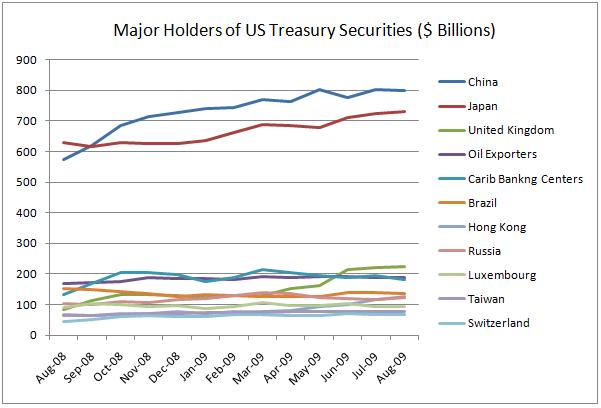
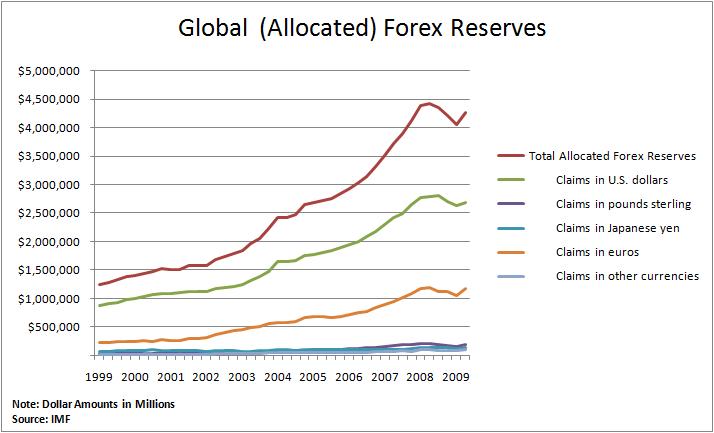
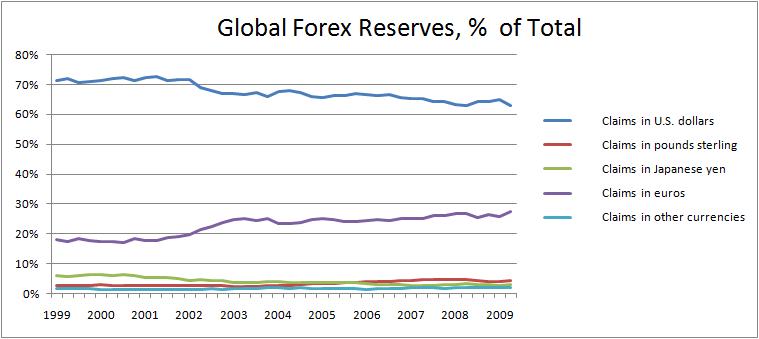
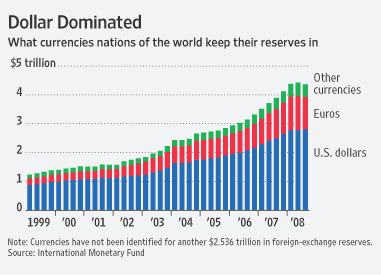
What analysts have been warning of for years has finally come to pass: the USD officially occupies a smaller portion of global foreign exchange reserves.  According to a recent IMF reports, the fraction of reserves denominated in Dollars has fallen from 66.5% to 63.8% over  the last year, with much of the difference offset by a proportional rise in the preponderance of the Euro.  Analysts first began sounding alarm bells as early as 2003, when the Dollar fell nearly 15% against the Euro.  However, it wasn't until 2006, when China began to accumulate reserves at an ever-increasing rate as its trade surplus exploded while at the same time the USD was tanking, that commentators began paying attention. 2007 brought several anecdotal reports that foreign Central Banks were both passively and actively diversifying their reserves.  Now, it looks as though these were not isolated incidents, but instead part of a broader trend. AFP reports:

In recent months, several emerging-market countries, whose foreign currency reserves have ballooned as a result of such factors as high commodity prices and strong exports, have signaled their intention to further diversify their foreign exchange reserves to offset the US currency's depreciation.

Read More: IMF says dollar losing ground in global forex reserves

January 01, 2008

Dollar Rally in 2008?

With the books closed on 2007, analysts are looking ahead to 2008.  With regard to the Dollar, market sentiment is surprisingly upbeat, with expectations of a 5-10% appreciation.   In blogging circles, the word "oversold" has been cropping up. Commentators cite a mix of technical and fundamental factors in their reasoning. Some economists expect the US trade deficit to decline marginally in 2008 and GDP to grow at 2-4%. These fundamentals, they argue, support a higher Dollar valuation. The price of oil has been singles out as a pivotal input in the US economic forecast.  If the price declines by 20% or more, it could offset the still-unfolding housing crisis and provide much-needed support for the faltering economy.  he EU could also take steps to support a Dollar appreciation.  EU Government and Central Bank officials have voiced concern over the Euro's rise, and could intervene on its behalf via a change in interest rates.  BloggingStocks reports:

"So far the ECB's deeds have not matched their words, but one gets the sense the ECB will take actions to strengthen the dollar and weaken the euro in 2008."

Read More: Experts see mild dollar rally in 2008 if economy holds up

December 24, 2007

Commentary: The Future of the Dollar

Despite its multi-year decline, the US Dollar remains the world’s undisputed reserve currency, claiming a 65% share of total Central Bank reserves. However, the chorus of soothsayers proclaiming the apocalypse for the Greenback is growing louder by the day. Every week seems to offer a new piece of news confirming that the Dollar’s reign is coming to an end. Analysts are drawing parallels between the British Pound of 50 years ago and the Dollar today. China is threatening to diversify its reserves into Euros. Iran and Venezuela are leading calls to price oil in terms of a basket of currencies, rather than in USD. The other members of OPEC are considering de-pegging their respective currencies from the Dollar. What does all of this mean? Is the Dollar truly in danger of being replaced as the world’s reserve currency?

The short answer is ‘no.’ The US twin deficits have expanded every year for the past decade and economic theory suggests that in order for a nation’s current account to rebalance itself, a decline in the value of its currency is required. At the same time, these deficits are sustainable for as long as foreign investors, sovereign and private, are willing to sustain them. And despite the looming threat of recession, economic data and anecdotal stories suggests that such investors remain willing to lend their financial support. For example, the announcement of record-breaking losses by American financial institutions has been met with solid commitments to invest by international investors.

In addition, while foreign exchange reserve diversification is certainly justifiable from a risk management standpoint, it hardly makes sense from a financial standpoint. The case could have been made for foreign Central Banks to exchange their Dollars for Euros and/or Pounds several years ago when both currencies were trading at relative bargains to the USD. Now that these currencies are more expensive, it seems harder for to justify buying assets and securities denominated in them. Furthermore, Central Banks must recognize that diversifying now would be counter-productive, by sending a wave of panic through the markets and undermining their efforts. As one analyst pointed out, Japan and China, the two largest holders of USD, both have a vested interest in an expensive Dollar.

However, the long answer to the question posed at the beginning of this article is closer to ‘maybe’ than ‘no.’  In the long-term, Central Banks will certainly move towards a more diversified portfolio of currencies.  For countries like China and Japan, this will help minimize risk.  For countries in the Middle East that peg their currencies to the Dollar, this will enable them to conduct monetary policy independent of the US.  Ultimately, US capital markets are the most stable and liquid in the world, and regardless of the value of the USD, it will serve the interests of Central Banks to denominate a large portion of their portfolios in Dollars.  Besides, analysts can be extremely fickle. It was only five years ago that the Euro was trading below parity with the USD and analysts were predicting its collapse.  The fundamentals underlying both currencies have not changed much since then, yet commentators have reversed their positions. Who knows what such analysts will be preaching five years from now…

December 05, 2007

A reprieve for the Dollar?

The last two years have witnessed a veritable collapse in the value of the Dollar, which has declined over 25% against the Euro, alone.  While opinion remains divided, many analysts are predicting a (temporary) cessation in the Dollar’s downward slide.  The reasoning is that the worst possible scenario involving the American housing crisis has already been priced into the Dollar.  Furthermore, experts argue that the inevitable loosening of American monetary policy will help boost the American economy by preventing it from slipping into recession. Finally, there is the notion that China will begin to take steps to appreciate its currency relative to the Euro, which has actually risen against the RMB.  The law of triangular arbitrage requires that any rise in the Euro against the Yuan must be matched by a proportional rise in either the Dollar/Euro or the Dollar/RMB rate, the latter of which seems unlikely.  Dow Jones reports:

There is also the possibility that official Chinese purchases of the euro could decline after last week's visit by a delegation from the European Central Bank to Beijing, anxious to reduce upward pressure on the single currency.

Read More: Chances Of Dollar Bounce May Be Rising

November 30, 2007

Fed to Cut Rates Next Month?

In recent speeches, two high-ranking officials from America’s Federal Reserve Bank gave conflicting indications regarding the likelihood of rate cuts next month. Both officials were deliberately ambiguous in their speeches, though one went so far as to rule out a rate cut while the other hinted at its inevitability. Nonetheless, analysts used the speeches to buttress their conclusion that a rate cut is probable. In fact, the futures market has priced in a 94% chance that rates will be cut by 25 basis points at the next meeting, on December 11. Likewise, it seems a rate cut has already been priced into the USD, which was virtually unaffected by this story. MSNBC reports:
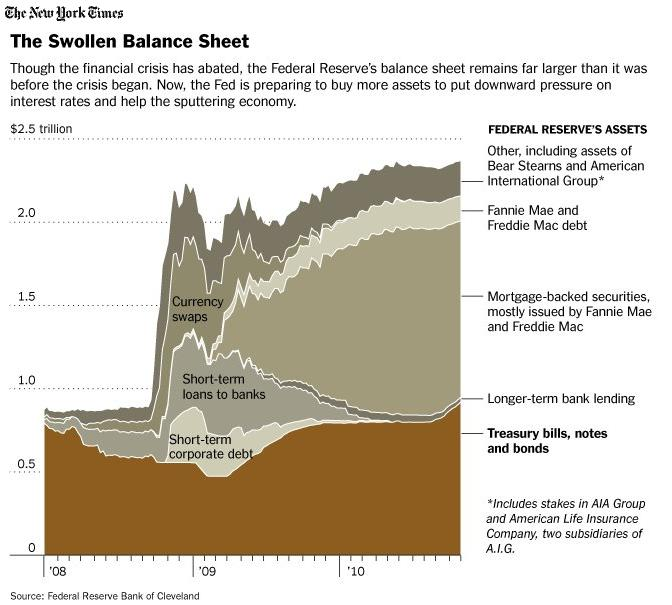
On the currency markets, the heightened expectations of a US rate cut cut did little to hurt the dollar, as investors took the view that the currency's recent weakness had gone far enough.

Read More: Fed stance sends equities soaring

November 28, 2007

Gulf States to End Dollar Peg

Earlier this week, we reported that the members of OPEC are mulling the possibility of pricing oil contracts in a basket of currencies, rather than solely in Dollars.  In a related move, the members of the Gulf Co-operation Council (GCC) are also rethinking their exchange rate policies. Currently, the members of the GCC, consisting of United Arab Emirates (UAE), Saudi Arabia, Kuwait, Qatar, Oman and Bahrain, all currently peg their respective currencies to the Dollar, in some form or another.  However, this policy is being scrutinized as a result of the falling Dollar, which has dragged down GCC currencies proportionately and triggered double-digit inflation.

In fact, Kuwait has already de-linked its currency from the USD and instead pegged it to a basket of currencies, so as to give it more flexibility in conducting monetary policy.  This represents the most likely course for the rest of the GCC, since it would allow them to maintain exchange rate stability while increasing their flexibility in conducting monetary policy.  This policy change, combined with the potential switch in oil pricing among OPEC nations, bodes ill for the Dollar. At the very least, it would result in decreased demand for USD and for Dollar-denominated assets. At worst, it would result in active diversification, of rotating foreign exchange reserves into assets denominated in other currencies, to support the new peg.

Read More: Countdown to lift-off

November 26, 2007

The End of Petrodollars?

Currency traders who have done their homework are no doubt well aware that one of the countervailing forces to the Dollar’s decline is the so-called petrodollar phenomenon.  In short, because oil contracts are settled in USD, the global demand for USD is held artificially high.  However, due primarily to the rapid decline of the Dollar, the members of OPEC are studying the feasibility of pricing oil in terms of a basket of currencies, rather than solely in terms of Dollars. This proposal is still in the earliest stages of planning, and it’s not yet clear exactly how it would work.  One thing is certain: if such a change were implemented, the decline of the Dollar would accelerate.  OPEC is scheduled to hold several high-level meetings over the next month, which should produce further developments. Reuters reports:

Venezuela's Energy Minister Rafael Ramirez said…“The need to establish a basket of currencies ... will probably be a point of discussion in the next OPEC summit.”

Read More: OPEC to study currency basket for pricing

November 19, 2007

Fed to Hold Rates?

In a recent speech, a prominent Federal Reserve Board governor strongly hinted that the Fed would maintain US interest rates at current levels at the Fed's next meeting.  The Fed is caught in the delicate position of trying to balance economic growth with the specter of inflation.  While technically the Fed is always trying to meditate between these two outcomes, its current position is especially tenuous since the US economy is trending downward while inflation trends upward.  Despite the emphatic claims to the contrary, futures markets are still pricing in a rate cut, setting the stage for a showdown with the Fed.  As usual, the Dollar's fate hangs in the balance.  The Financial Times reports:

Mr Kroszner said that in the near term "the economy will probably go through a rough patch" with falls in house prices, home construction and subdued consumer spending. He did not rule out a future cut in rates.

Read More: Fed and markets set to clash

November 15, 2007

Why China Should Not Dump the Dollar

In fact, China may have to increase its exposure to the dollar, according to the comments of Brad Setser of the Council of Foreign Relations: "In my mind, so long as China resists more rapid appreciation of the renminbi versus the dollar, it's rather difficult for China to diversify in any meaningful way against the dollar. If China really started to diversify away from the dollar, I think it's a big enough player that it would put downward additional pressure on the dollar."

And additional downard pressure on the USD should be what China is trying to avoid. China, being the largest exporter to the U.S. does not want to see appreciation of its currency against the USD, as that would make its goods more expensive (and therefore less competitive) in America.

In fact, Setser goes on to say that in order to prevent the USD from sliding even further downward against the RMB, China would have to not only retain its present stock of USD, but in fact buy even more.

Read more: Can China Dump the Dollar?

November 10, 2007

Fed Comments Punish Dollar

A recent speech by Ben Bernanke, chairman of the US Federal Reserve Bank, sent the Dollar spiraling downward to fresh lows against all of the world's major currencies.  This is perhaps surprising, given that Bernanke used the speech to warn that higher-than-expected inflation may drive the Fed to hike rates, which is exactly what Dollar bulls wanted to hear.  The downside of the speech, reflected in the markets' reaction, was that the primary cause of the inflation is rising oil prices, would could plunge the US economy into stagflation: slow growth and high inflation, an unenviable position if there ever was one.  Forbes reports:

Rhonda Staskow at Thomson's IFR Markets said: 'There is no Goldilocks scenario from Bernanke, who sees risks from inflation and an economic slowdown - the worst of both worlds.'

Read More: Dollar sinks after Bernanke speech

November 08, 2007

ECB to Hold Rates

The European Central Bank (ECB) will likely maintain its benchmark interest rate at 4.00% at its meeting his week.  The Bank of England is also expected to hold its lending rate in place, at 5.75%.  While these two moves should be seen by Dollar bulls as acts of clemency, they are more akin to a stay of execution than to a commutation of its death sentence.  The reasoning is that it is inevitable that the US-EU interest rate difference will be bridged over the next few months, as the Fed continues to lower rates while the ECB is in the process of hiking them.  The only question is when.  Accordingly, analysts will be paying close attention to the language employed by the heads of the various Central Banks at their next meetings to get a sense of timing.

Read More: Dollar hovers above lows

November 07, 2007

China talks up Diversification

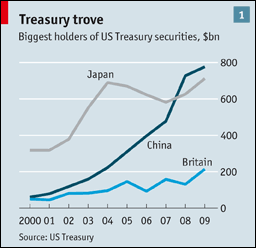
A high-ranking official in China's government recently gave a speech urging the Central Bank to (continue to) diversify its vast holdings of foreign exchange, currently estimated at $1.4 Trillion and rising.  The speech was atypical in its level of directness, as Chinese officials tend to speak with a certain degree of circumspection if they think there is any possibility that their comments will reach the public. Specifically, he advocated making a play on the current volatility in forex markets, by selling “weak currencies” in favor of “strong currencies.”  In fact, the most recent data shows that China is already doing just that: its holdings of US government bonds have declined even as its reserves have risen.  The Financial Times reports:

Although he later tried to play down his comments, saying he had not been speaking in an official capacity, the damage was done.

Read More: Dollar sinks to new lows

October 27, 2007

Fed may Cut Rates Again

The Dollar is still reeling from the 50 basis point rate cut imposed by the Fed last month. Nonetheless, some analysts are predicting that the Fed will cut rates again on October 31, this time by a quarter of a percentage point, to 4.5%. The looming fall in real estate prices (termed the sub-prime crisis) has officially spread to the rest of the economy, and the Fed is trying to preempt a complete collapse in investor and consumer confidence.  Experts remain divided as to whether the Fed will cut rates now or next month. Either way, you can expect the Dollar to drop to fresh lows against the Euro.  Thomson Financial reports:
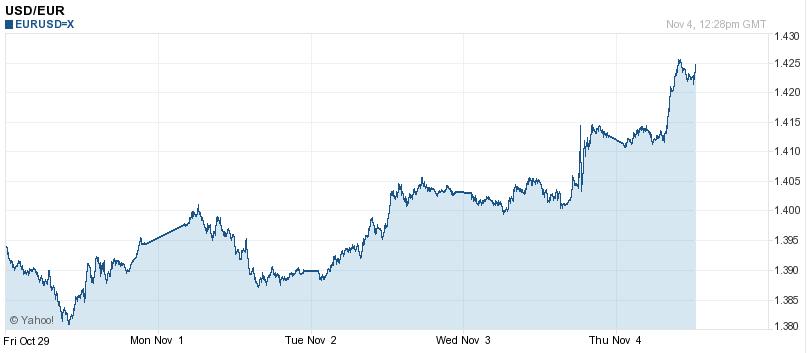
“The combination of weak US data, rising expectations of aggressive Fed easing and a stable, albeit fragile, Wall Street is a perfect recipe for euro-US dollar and Australian dollar-US dollar strength,” said one analyst.

Read More: US dollar hovers near all-time low vs euro on chances of Fed rate cut

October 23, 2007

G7 Comments on USD D